Updated UK buying guide
Best Patio Heaters UK: Mounting, Power & Running Costs
By Tim McGregor · Updated 11 September 2026
Choose the seating area and a suitable mounting position first. These are electric heaters with different installation formats; a maximum wattage is not a guarantee of warmth across an entire open patio.
Research-based comparison using manufacturer information checked 11 September 2026. We have not personally tested these products. Recommendations are editorial judgements about their published differences.
Quick answer
- Veito Blade S2500 Black Indoor & Outdoor Heater: for a fixed installation.
- Outsunny 2kW Wall Mounted Infrared Patio Heater: for stepped power settings.
- Herschel Colorado 2500W Infrared Patio Heater with Remote and Stand: for a freestanding setup.
Choose the seating area and a suitable mounting position first. These are electric heaters with different installation formats; a maximum wattage is not a guarantee of warmth across an entire open patio.
Top 3 patio heaters compared
Choose by the job and trade-offs below. Amazon links open product searches: confirm the exact model, bundle and seller on the selected offer.
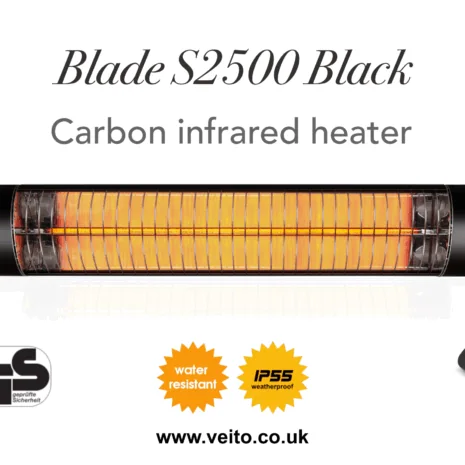
Veito Blade S2500 Black Indoor & Outdoor Heater
Veito Blade S2500 is a fixed-installation option rated at 2,500 W. Consider where it can be mounted according to its manual before comparing appearance or headline coverage claims.
Benefits & things to consider
Consider it if
You have a suitable fixed position near the seating area.
Main compromise
A fixed heater is less adaptable when you move the furniture.
Before ordering
Check the mounting accessories, clearances and electrical requirements for your location.
Manufacturer reference · checked 11 September 2026.
Check latest price on Amazon Explore this product ↗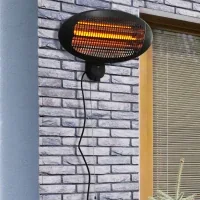
Outsunny 2kW Wall Mounted Infrared Patio Heater
This Outsunny wall-mounted model offers three stated power settings and pull-cord control. The exact model matters because other Outsunny heaters use different controls and formats.
Benefits & things to consider
Consider it if
You want selectable output from a wall-mounted heater.
Main compromise
The pull cord and mounting position must be practical to reach and use.
Before ordering
Confirm 842-123V01, its 1.5 m cord and the manual’s installation requirements.
Manufacturer reference · checked 11 September 2026.
Check latest price on Amazon Explore this product ↗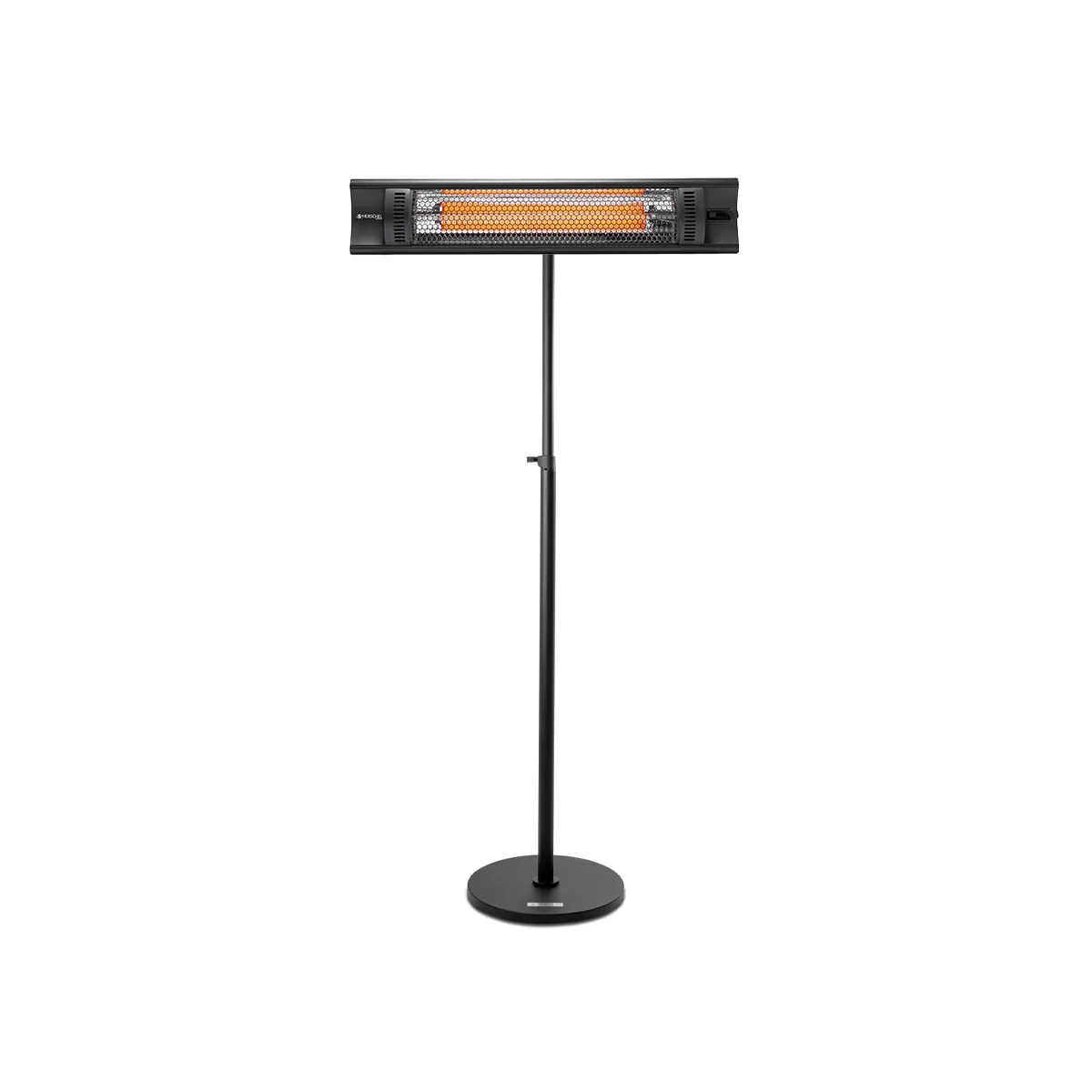
Herschel Colorado 2500W Infrared Patio Heater with Remote and Stand
Herschel Colorado freestanding is the stand-based alternative. It avoids choosing a wall position, but the stand needs its own suitable floor area and the cable route still matters.
Benefits & things to consider
Consider it if
Your layout suits a freestanding heater better than a wall-mounted one.
Main compromise
The stand occupies patio space around seating and movement routes.
Before ordering
Check that the selected Colorado offer includes the stand and remote.
Manufacturer reference · checked 11 September 2026.
Check latest price on Amazon Explore this product ↗How we chose these patio heaters
We compared the published differences that affect the buying decisions explained below: what does an hour of patio heating cost; wall-mounted or freestanding; do not buy on coverage area alone.
This is a focused shortlist, not an exhaustive market test. We have not measured performance or long-term reliability. The manufacturer references support specifications; our reasons to consider each product are editorial interpretations. Prices and availability depend on the selected retailer offer.
At a glance
| Product | Specification or model check | Consider it if | Compromise |
|---|---|---|---|
| Veito Blade S2500 Black Indoor & Outdoor Heater | 2,500 W · IP55 rating · Wall or ceiling format | You have a suitable fixed position near the seating area. | A fixed heater is less adaptable when you move the furniture. |
| Outsunny 2kW Wall Mounted Infrared Patio Heater | 650 / 1,300 / 2,000 W · Pull-cord control · 842-123V01 | You want selectable output from a wall-mounted heater. | The pull cord and mounting position must be practical to reach and use. |
| Herschel Colorado 2500W Infrared Patio Heater with Remote and Stand | 2,500 W · IP55 rating · Stand and remote format | Your layout suits a freestanding heater better than a wall-mounted one. | The stand occupies patio space around seating and movement routes. |
What to check before buying
- Veito Blade S2500 Black Indoor & Outdoor Heater: Check the mounting accessories, clearances and electrical requirements for your location.
- Outsunny 2kW Wall Mounted Infrared Patio Heater: Confirm 842-123V01, its 1.5 m cord and the manual’s installation requirements.
- Herschel Colorado 2500W Infrared Patio Heater with Remote and Stand: Check that the selected Colorado offer includes the stand and remote.
Related comparisons
You may also want to compare our guides to the best garden tools , best outdoor lights . You can also browse the full Outdoor Living category.
How to choose patio heaters
What does an hour of patio heating cost?
Use power in kW × your electricity rate. At an illustrative 25p/kWh, continuous use at 2 kW costs 50p per hour and 2.5 kW costs 62.5p. At the same example rate, 650 W costs about 16.3p per hour. These are arithmetic examples, not a current tariff or measured usage.
Wall-mounted or freestanding?
A wall-mounted unit keeps the floor clearer but ties the heater to one approved position. A stand needs floor space and a suitable cable route. Draw the table, chairs and walking routes before choosing, then check the exact installation instructions rather than assuming every location is acceptable.
Do not buy on coverage area alone
Exposure and seating layout affect how useful an outdoor heater will be. We have not measured heat distribution for these models. An IP rating does not remove the need to follow the manufacturer’s placement, weather and electrical guidance; confirm suitability for your particular patio.
Specifications and care sources
- Veito Blade S2500 Black Indoor & Outdoor Heater — manufacturer information
- Outsunny 2kW Wall Mounted Infrared Patio Heater — manufacturer information
- Herschel Colorado 2500W Infrared Patio Heater with Remote and Stand — manufacturer information
Manufacturer information checked 11 September 2026. Follow the instructions supplied with your exact product; regional versions and bundles can differ.
Final verdict
Choose the seating area and a suitable mounting position first. These are electric heaters with different installation formats; a maximum wattage is not a guarantee of warmth across an entire open patio.
Use the shortlist to narrow your choice, then confirm the specific model and its main compromise in the table before ordering. A higher specification is useful only when it serves your routine.
Frequently asked questions
Is a 2,500 W heater cheaper to run than a 2,000 W one?
At full continuous power on the same tariff, 2,500 W uses more electricity per hour. Actual spending depends on settings and time in use.
Do these three heaters have the same mounting style?
No. Veito and this Outsunny model are fixed-installation options; the selected Herschel Colorado version is freestanding.
Have you personally tested these patio heaters?
No. We researched published manufacturer information on 11 September 2026. We do not claim hands-on performance or durability testing.
Do the Amazon links open an exact product listing?
They open product searches. Results can include other models, bundles and sellers. Confirm the full model name and included items before ordering.