Updated UK buying guide
Best Fans in 2026
This guide is for people who want useful cooling without buying an air conditioner. We have narrowed the category to three useful choices: the best overall option, the best value buy and the premium or specialist pick worth considering.
Research-based comparison. Not every product has been personally tested. How we choose our picks.
Quick answer
If you want the best all round fit in this guide, start with Shark FlexBreeze Portable Fan FA220UK. If price matters most, look at MeacoFan 1056 Air Circulator. If you want the more premium or specialist option, compare Duux Whisper Flex 2.
The most common mistake is buying the product with the biggest list of features, then finding it does not suit your space, routine or budget. Choose for real use first.
Top 3 fans compared
These are not three random products. Each one has a clear role, so you can match the product to the way you actually buy and use things.

Shark FlexBreeze Portable Fan FA220UK
It stands out because it is genuinely versatile. Cordless use and outdoor suitability make it more useful than a normal pedestal fan.
Benefits & things to consider
Best for
homes that want one fan for bedrooms, patios and flexible summer use
Main drawback
not as discreet as a small bedroom fan
Why it is worth considering
- Clear fit for homes that want one fan for bedrooms, patios and flexible summer use
- It stands out because it is genuinely versatile.
- Key points to compare: indoor and outdoor use; corded or cordless; optional misting
Before you buy
- Main compromise: not as discreet as a small bedroom fan
- Open the manufacturer source below and confirm the current specification and warranty.
- Check current retailer stock, delivery and returns before ordering.
Manufacturer check: SharkNinja UK · verified 18 August 2026.
Check latest price on Amazon Explore this product ↗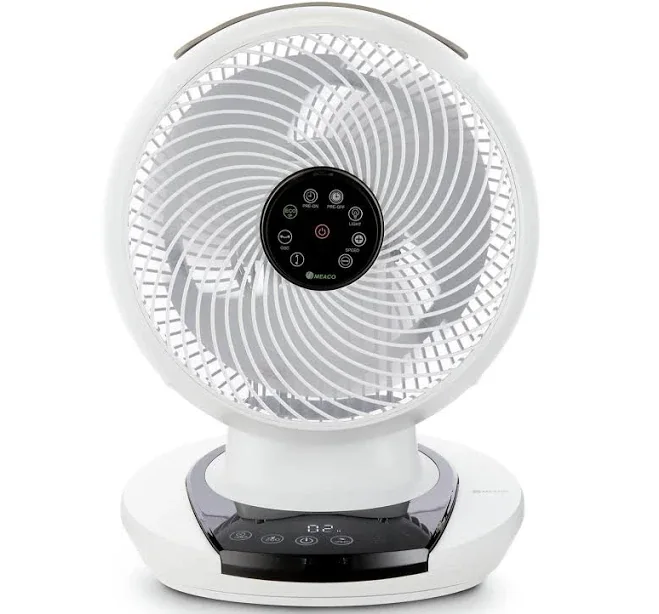
MeacoFan 1056 Air Circulator
It has long been a strong UK choice because it moves air well without sounding harsh, which matters more at night than fancy styling.
Benefits & things to consider
Best for
bedrooms and living rooms where quiet airflow matters
Main drawback
less visually premium than Dyson or smart tower options
Why it is worth considering
- Clear fit for bedrooms and living rooms where quiet airflow matters
- It has long been a strong UK choice because it moves air well without sounding harsh, which matters more at night than fancy styling.
- Key points to compare: quiet operation; oscillation; strong air movement
Before you buy
- Main compromise: less visually premium than Dyson or smart tower options
- Open the manufacturer source below and confirm the current specification and warranty.
- Check current retailer stock, delivery and returns before ordering.
Manufacturer check: Meaco UK · verified 18 August 2026.
Check latest price on Amazon Explore this product ↗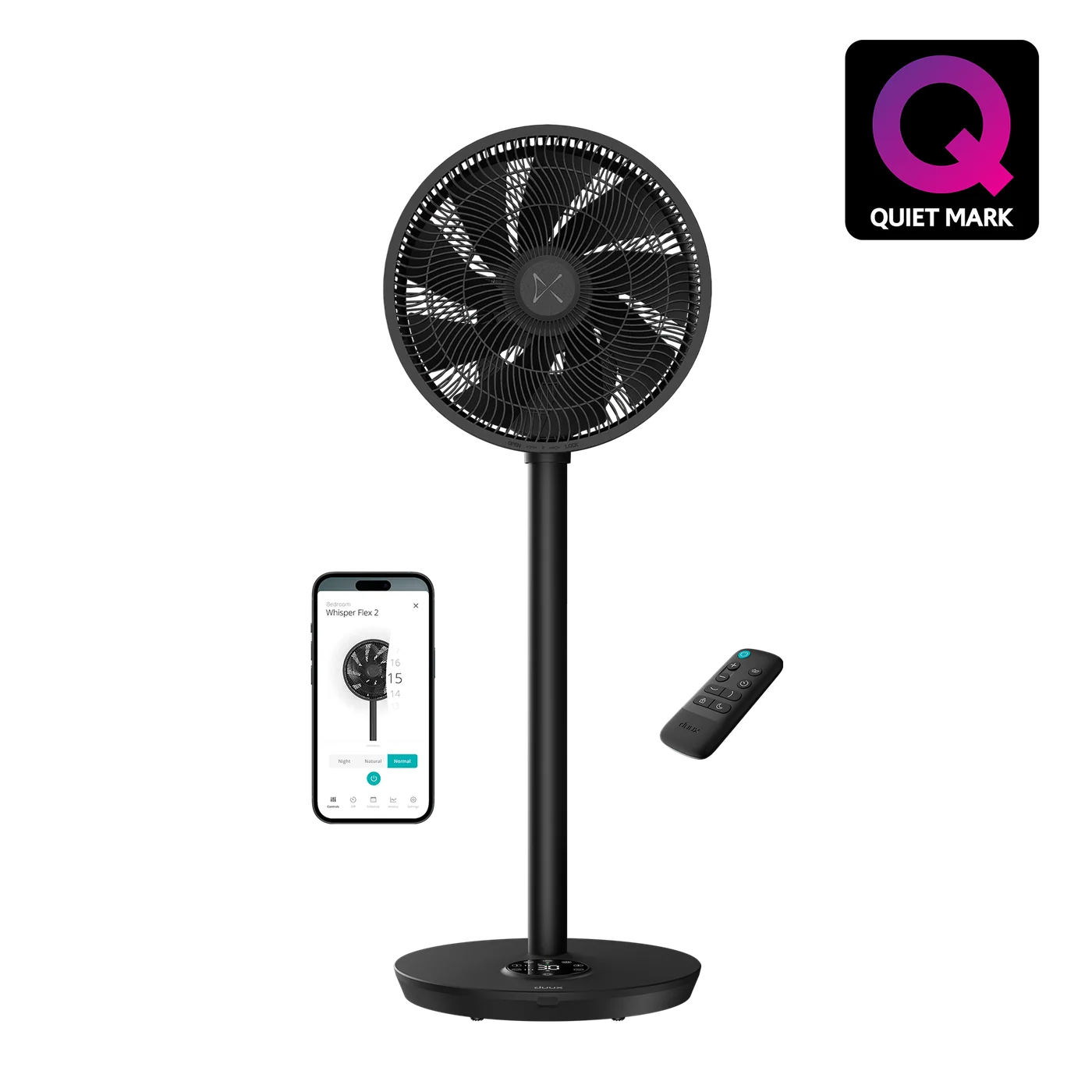
Duux Whisper Flex 2
A quiet, height-adjustable fan designed for bedrooms and living spaces. Its low-noise DC design and long air reach make it a stronger current alternative to an out-of-stock premium fan pick.
Benefits & things to consider
Best for
bedrooms and buyers who prioritise quiet operation
Main drawback
premium price compared with a simple desk or pedestal fan
Why it is worth considering
- Clear fit for bedrooms and buyers who prioritise quiet operation
- A quiet, height-adjustable fan designed for bedrooms and living spaces.
- Key points to compare: up to 15m air reach; 13dB quoted minimum noise; height-adjustable design
Before you buy
- Main compromise: premium price compared with a simple desk or pedestal fan
- Open the manufacturer source below and confirm the current specification and warranty.
- Check current retailer stock, delivery and returns before ordering.
Manufacturer check: Duux UK · verified 18 August 2026.
Check latest price on Amazon Explore this product ↗How we chose these fans
Real use
We prioritised products that solve normal daily problems, not just models with impressive claims.
Value
We looked for a clear reason each pick justifies its price, whether budget, mid range or premium.
Availability
We avoided obscure options where stock, support or replacement parts may be difficult to find.
Trade offs
Every product has downsides. We explain who should skip each one as well as who should buy it.
Current fit
These picks were verified on 18 August 2026 and should still be checked against current prices before buying.
At a glance
| Product | Pick | Best for | Main drawback |
|---|---|---|---|
| Shark FlexBreeze Portable Fan FA220UK | Best overall | homes that want one fan for bedrooms, patios and flexible summer use | not as discreet as a small bedroom fan |
| MeacoFan 1056 Air Circulator | Best value | bedrooms and living rooms where quiet airflow matters | less visually premium than Dyson or smart tower options |
| Duux Whisper Flex 2 | Best premium | bedrooms and buyers who prioritise quiet operation | premium price compared with a simple desk or pedestal fan |
What to check before buying
Check the current price, delivery time, warranty, dimensions, return window and recent owner reviews. For anything electrical, check UK plug suitability and whether the manufacturer offers UK support.
For this category, the sharper question is not simply “what is the best fan?” It is “which one fits my routine, space and budget without becoming annoying after the first week?”
Related comparisons
You may also want to compare our guides to the best dehumidifiers , best portable heaters . You can also browse the full Home Comfort category.
How to choose fans
Start with your normal use, not the longest specification list. Compare air reach, noise at sleep speeds, oscillation, floor space, controls, portability and whether you need cordless use. The best choice is the model that removes the compromises you notice every week, not the one with the most features on paper.
Running cost and ownership
Fans usually cost much less to run than active cooling because they move air rather than chill it. Compare wattage at the speed you will use, not just the maximum setting. Prices, tariffs, consumables and stock change, so use current figures when you make the final comparison.
Common problems before you replace it
Rattles often come from loose guards, blades or an uneven base. Clean dust from the intake and blades, keep the fan clear of curtains and stop using it if the motor smells hot or the cable is damaged. If a product shows heat damage, swelling, exposed wiring or another safety fault, stop using it and follow the manufacturer’s support advice.
Final verdict
For most buyers, Shark FlexBreeze Portable Fan FA220UK is the best starting point. MeacoFan 1056 Air Circulator is the more cost conscious choice, while Duux Whisper Flex 2 is the stronger premium or specialist option.
The best next step is to compare today’s price and check whether the size, features and support fit the way you will actually use it.
Frequently asked questions
How do I choose the best fan?
Start with how you will use it most often, then compare size, comfort, power or capacity, warranty, cleaning and the main trade offs. The best fan is the one that fits your normal use, not just the one with the longest feature list.
Is the premium fan always worth it?
No. Premium models are worth it when the extra performance, build quality or convenience will be used regularly. For occasional use, the best value pick is often the sharper buy.
How often is this fans guide updated?
This guide was last verified on 18 August 2026. Prices, availability and product ranges change, so always check the current details before buying.
Do you test every fan yourself?
No. We compare current manufacturer information, specifications, availability, practical fit and clear limitations. Where we have not personally tested a product, we say so.
Why only three fans?
Too many options often makes buying harder. The aim is to give you three clear routes: best overall, best value and best premium or specialist choice.